If you’ve just been in a car accident anywhere around Prosper, Celina, Frisco, or McKinney, there’s a good chance you feel… fine. Sore, maybe a little shaken up, but not “hurt.” That feeling is one of the most misleading parts of a crash, and it’s the reason so many accident injuries go unaddressed until they’ve become a much bigger problem than they needed to be.
TL;DR: Adrenaline and stress hormones mask pain for hours or even days after a crash, which is why whiplash and other soft-tissue injuries often don’t show up until 24–72 hours later. Get checked for fractures or internal injury first if there’s any doubt — then get a chiropractic evaluation within the first few days, even if you feel okay. Waiting is the single biggest reason accident injuries turn chronic.
Right After the Crash: Get Safe, Get Checked, Document Everything
Before anything else: get to safety, exchange information, and if you’re at all unsure whether you’re seriously hurt, let the ER rule out fractures, internal bleeding, or head injury. That’s what emergency rooms are built for, and it’s not a step to skip.
Here’s the part people don’t always realize, though: an ER visit is designed to catch emergencies — it’s not built to evaluate the kind of soft-tissue and nervous system disruption that causes most of the pain people deal with weeks after a crash. A clean X-ray or CT scan at the ER doesn’t mean your spine and joints came through unaffected.
While it’s fresh, take photos of the vehicles, get the other driver’s insurance information, and write down how you’re feeling — even minor stiffness or a mild headache. That record matters more than most people expect, both for your own care and for any insurance claim.
What’s Actually Happening in Your Body During a Crash
Even a “minor” fender-bender subjects your neck and spine to forces they’re not built to absorb — your head snaps forward and back faster than your muscles can brace for it. That’s whiplash: the ligaments, muscles, and joints in your neck get stretched and strained, and the joints themselves can shift out of their normal alignment.
This is also where the adrenaline problem comes in. During and immediately after a crash, your body floods with adrenaline and cortisol — hormones that are excellent at keeping you calm and functional in a crisis, and just as good at masking pain signals. That’s why so many people walk away from an accident feeling “lucky,” only to wake up two or three days later unable to turn their head.
Why the First 72 Hours Matter
Once the adrenaline wears off, inflammation moves in — and that’s usually when the stiffness, headaches, and shooting pain actually show up. This delayed window is exactly why so many accident injuries get dismissed early (“I feel fine”) and then get worse before anyone addresses them.
The earlier a misalignment or soft-tissue injury is identified, the easier it is to treat. Left alone, what starts as mild stiffness can settle into chronic neck or back pain, tension headaches, or nerve irritation that’s much harder to resolve months down the line. Getting evaluated in the first few days — even if you feel mostly okay — is the single best thing you can do for your long-term recovery.
What a Car Accident Chiropractor Actually Checks For
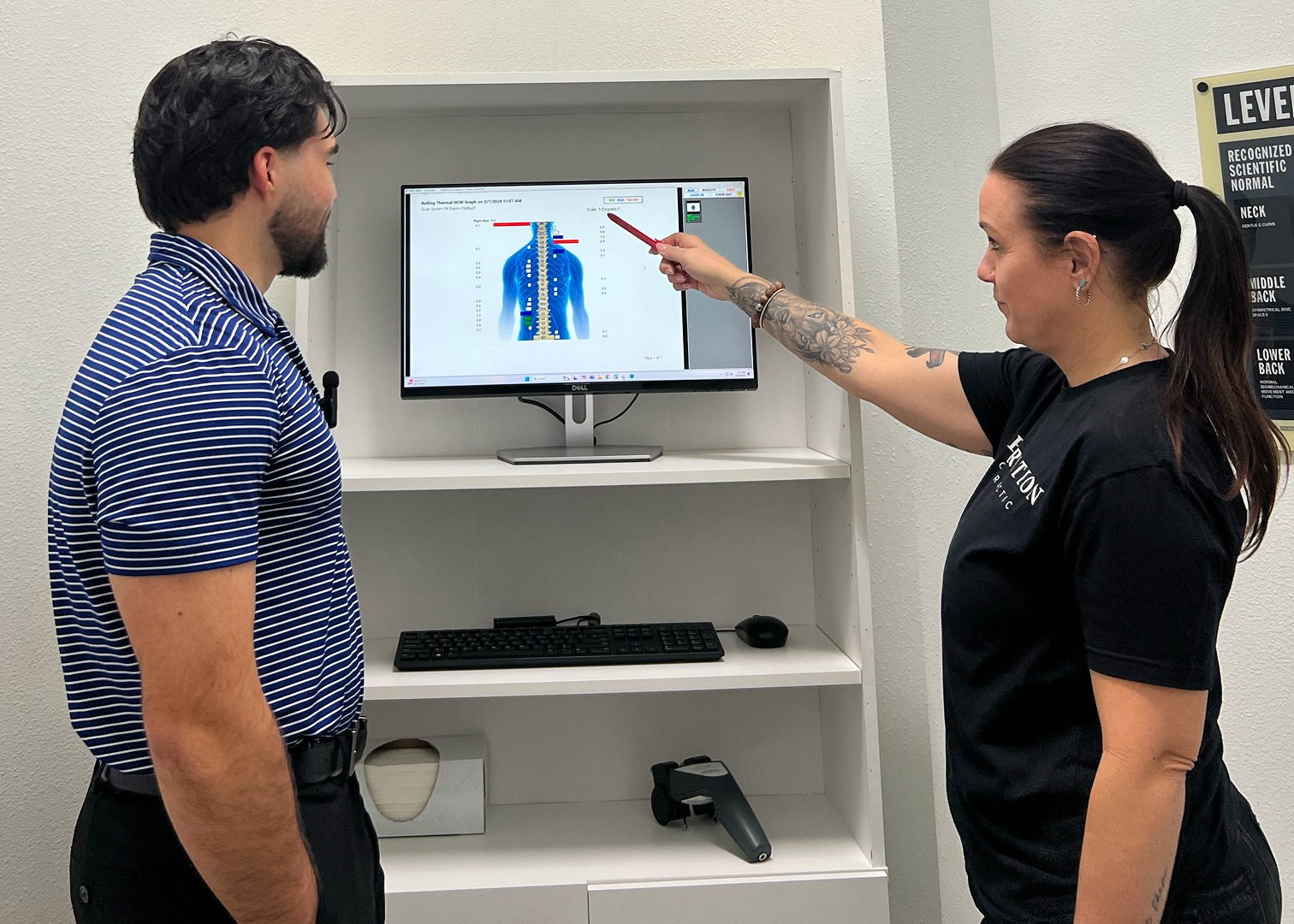
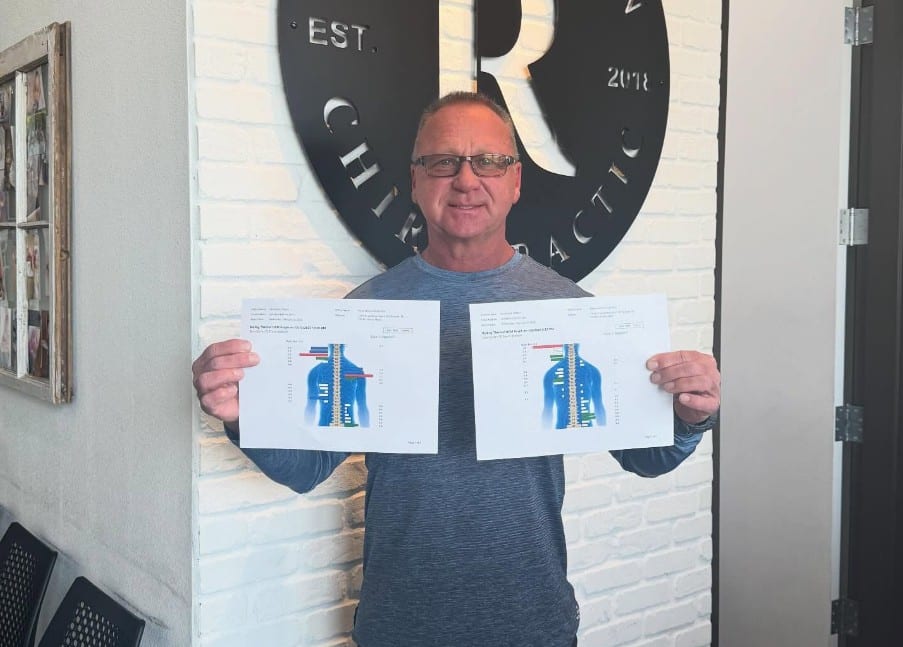
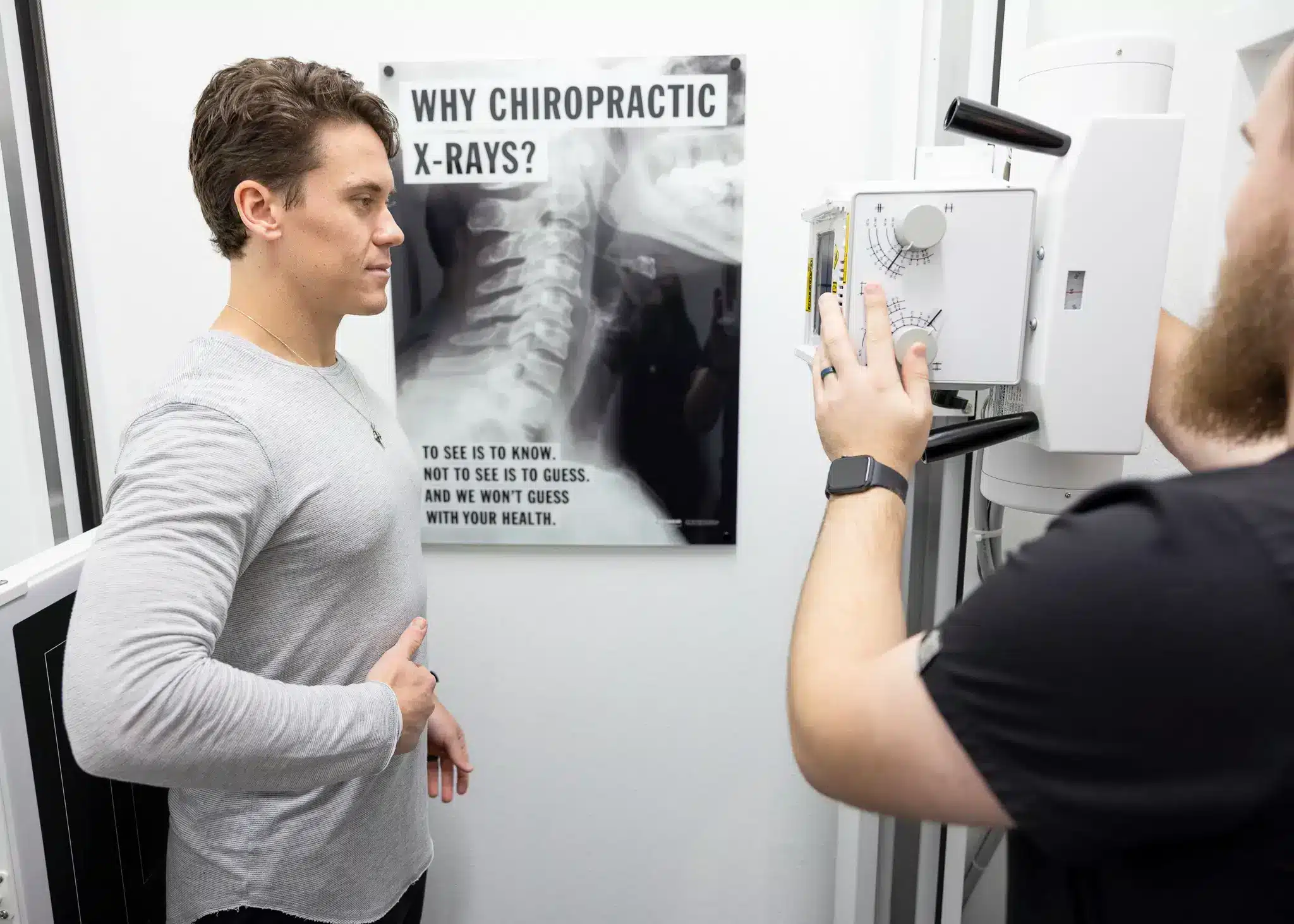
At Restoration, we don’t start with treatment — we start with finding out exactly what the crash did to your body. That means NASA-certified nervous system scanning to check how your nervous system is functioning, plus on-site digital X-rays to see the structural picture: alignment, disc position, and anything else an X-ray can catch that a “you’re fine” feeling can’t.
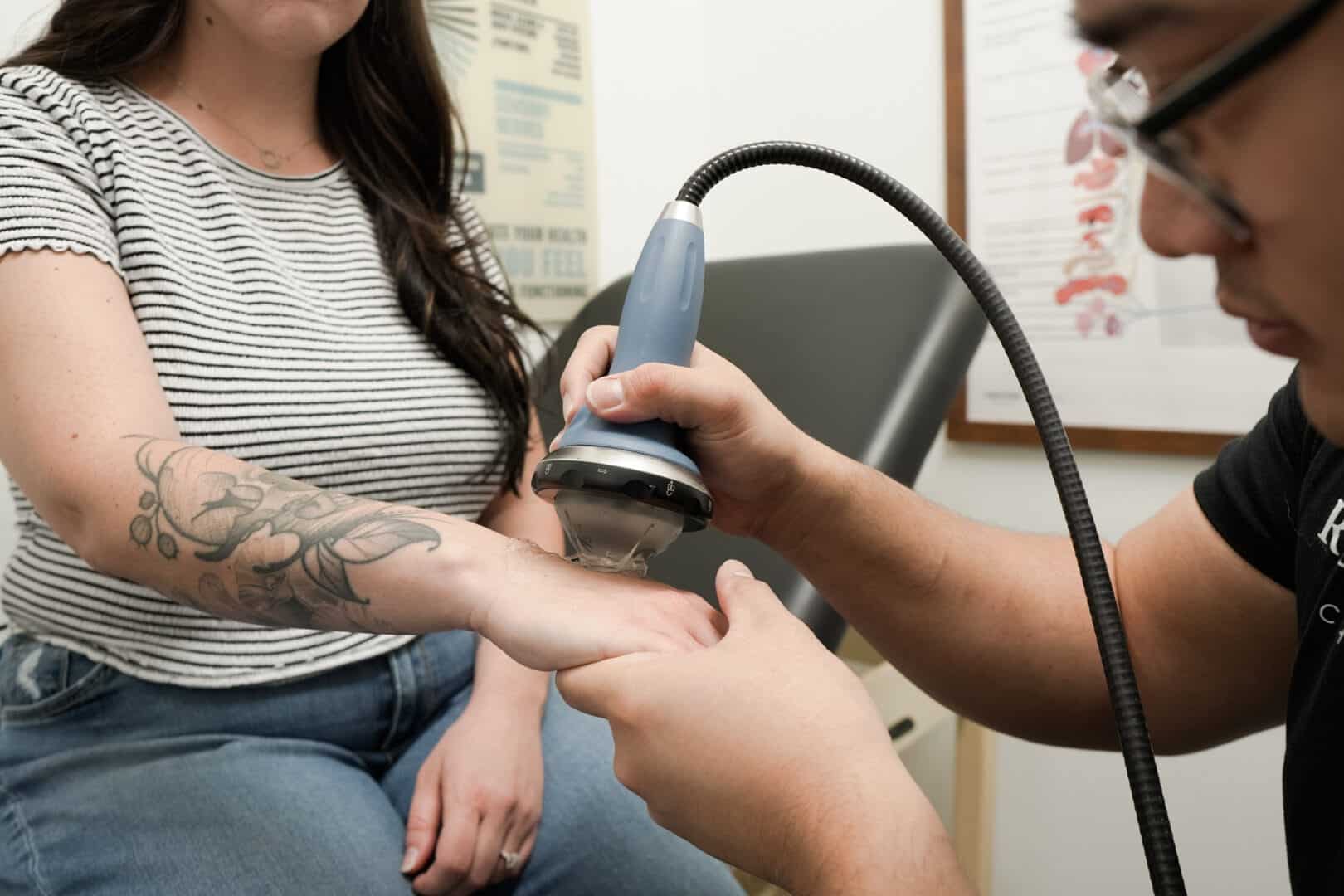
From there, Dr. Jake and Dr. Stephanie build a plan around what we actually find — whether that’s whiplash-related joint restriction, disc irritation, or nerve involvement. Treatment uses our gentle, instrument-assisted Torque Release Technique, which corrects misalignment without twisting, cracking, or aggressive force — something we think about carefully with an already-irritated, freshly-injured spine.
See our full Car Accident Chiropractic approach →
What About Insurance and Personal Injury Claims?
One thing that stops a lot of people from getting checked: not knowing how the paperwork side works. You don’t have to figure that out alone. We regularly coordinate directly with attorneys and insurance carriers on personal injury cases, including PIP (Personal Injury Protection) claims and third-party claims — so getting care doesn’t mean you also have to become your own claims adjuster.
What to Expect at Your First Visit
Every new patient starts with a full evaluation — scanning, exam, and X-rays — and an honest conversation about what we find. No pressure, no overpromising, and no assuming you need care you don’t. If your case is a good fit for what we do, we’ll say so. If something we find needs another provider first, we’ll tell you that too.
Don’t Wait for the Pain to Catch Up With You
Feeling okay right now doesn’t mean you walked away unaffected — it often just means the adrenaline hasn’t worn off yet. If you’ve been in an accident anywhere around Prosper, Celina, Aubrey, Frisco, McKinney, or Little Elm, the smartest move is getting checked while a misalignment is simple to fix, not after it’s had weeks to settle in.
Learn more about our Car Accident Chiropractic care or schedule your first visit → today, or call us at (972) 818-5820.